Zafu vs Zabuton: Choosing the Right Meditation Cushion for Your Practice
If you have ever sat for meditation on a hardwood floor with nothing but willpower between you and the ground, you understand why meditation cushions exist. The body, no matter how willing the spirit, needs support to sustain stillness. But when you begin shopping for meditation seating, two Japanese terms appear everywhere—zafu and zabuton—and the distinction between them is not always clear.
I have spent over a decade guiding students through their first meditation purchases, and the zafu-versus-zabuton question comes up in nearly every conversation. The truth is, these are not competing products. They are designed to work together. But understanding what each one does—and which you actually need—will save you money and dramatically improve your comfort on the cushion.
What Is a Zafu?
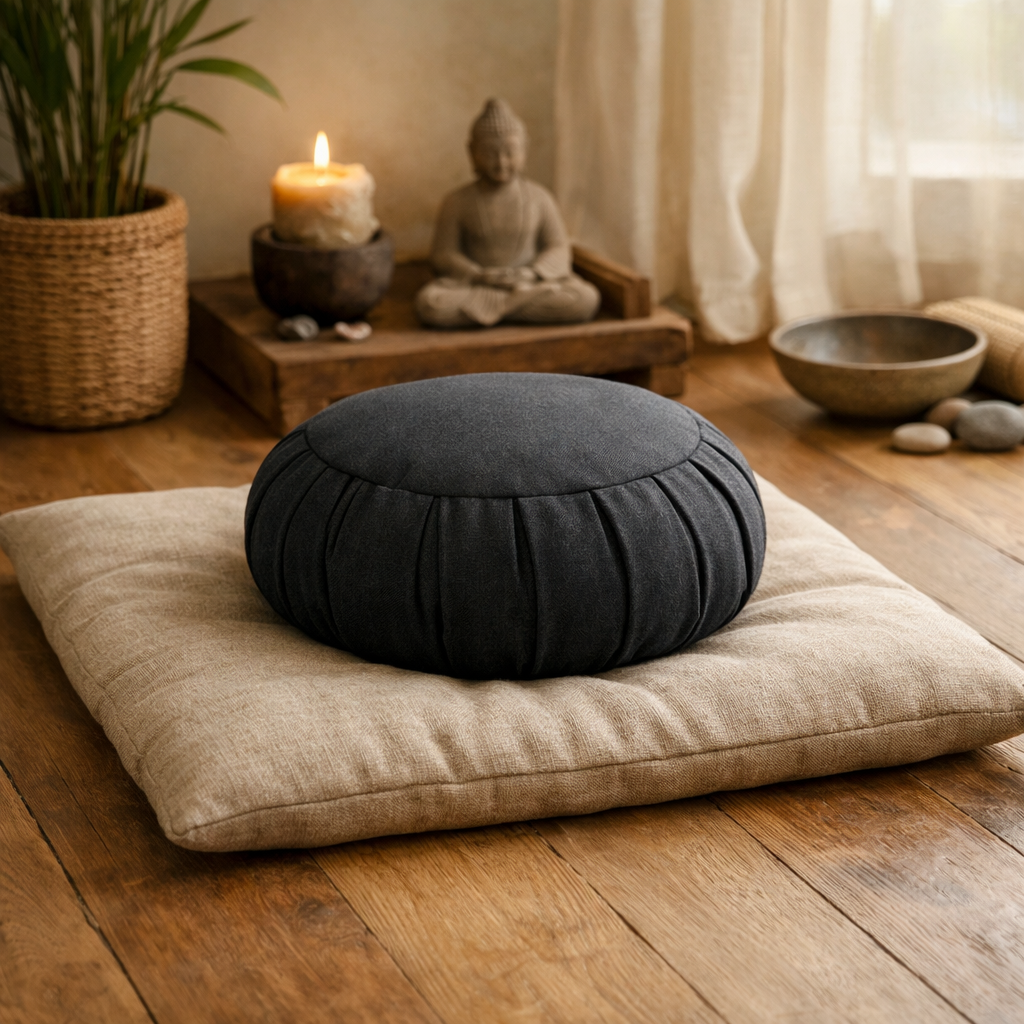
The zafu is the round, pleated cushion that most people picture when they think of meditation seating. Originating in Japanese Zen tradition, the word “zafu” literally translates to “sewn seat.” It is designed to elevate your hips above your knees, creating a forward pelvic tilt that allows the spine to maintain its natural curvature without muscular effort.
How a Zafu Supports Your Practice
When you sit directly on a flat surface, your pelvis tends to tilt backward, rounding the lower back. Within minutes, this posture creates compression in the lumbar spine, tension in the shoulders, and a cascading chain of discomfort that pulls your attention away from the breath and into the body.
A zafu lifts your sitting bones 4-7 inches off the floor, allowing gravity to do the postural work. Your knees drop below your hips, your pelvis tilts slightly forward, and your spine stacks naturally. The result is a posture that feels effortless—one you can sustain for 30, 45, or 60 minutes without the fidgeting and pain that plague unsupported sitting.
Zafu Variations
- Traditional round zafu: 14-16 inches in diameter, 5-7 inches tall. The standard choice for cross-legged sitting.
- Crescent zafu: Curved to allow the thighs to angle downward more naturally. Ideal for practitioners with tight hips.
- Square zafu: A broader base that accommodates multiple postures. The Brentwood Home Crystal Cove is a popular example.
- Travel zafu: Smaller, lighter, and often inflatable for portability.
What Is a Zabuton?
The zabuton is the large, flat rectangular mat that sits beneath the zafu. Its name translates to “sitting futon,” and its purpose is straightforward: cushioning everything the zafu does not—your knees, ankles, shins, and the tops of your feet.
Why the Zabuton Matters
When your zafu elevates your hips, your knees drop to the floor. On a carpeted surface, this may be tolerable. On hardwood, tile, or thin yoga mats, the pressure on your knee joints and ankle bones becomes painful quickly. A zabuton provides 3-4 inches of dense padding that absorbs this pressure, allowing you to sit for extended periods without joint discomfort.
I have worked with many students who invested in a quality zafu but skipped the zabuton, only to find that knee and ankle pain limited their practice more than hip tightness ever did. The zabuton is the unsung hero of comfortable meditation seating.
Zabuton Specifications
A standard zabuton measures approximately 25 by 31 inches—large enough to accommodate your seated posture with room for your knees and feet. Most are filled with cotton batting, though some premium options use a combination of cotton and foam for enhanced durability. A thickness of 3-4 inches is ideal.
Zafu vs Zabuton: A Direct Comparison
Here is a clear breakdown of how these two cushions differ and complement each other.
| Feature | Zafu | Zabuton |
|---|---|---|
| Shape | Round, crescent, or square | Large flat rectangle |
| Purpose | Elevates hips for spinal alignment | Cushions knees, ankles, and shins |
| Typical size | 14-16” diameter, 5-7” tall | 25” x 31”, 3-4” thick |
| Common fillings | Buckwheat hulls, kapok | Cotton batting, cotton/foam blend |
| Used alone? | Yes, on carpet or soft surfaces | Rarely—provides floor padding only |
| Price range | $30-$70 | $40-$80 |
Do You Need Both?
My honest recommendation: if your budget allows, invest in both. The zafu-zabuton combination is the gold standard for seated meditation comfort, and the investment pays dividends across thousands of practice sessions. If you must choose one first, start with the zafu—proper hip elevation has the most dramatic impact on posture and comfort.
Add a zabuton when you find yourself folding towels or blankets beneath your knees, which is a clear signal that your joints need more support.
| Cushion | Product Name | ASIN | Price ($) | |———|————-|——|———–| | Zafu | Florensi Zafu Meditation Cushion - Buckwheat Hull | B07Y8RJMTK | 39.97 | | Zabuton | Bean Products Zabuton Meditation Mat - Cotton | B004RCNLTQ | 69.95 | | Zafu + Zabuton Set | DharmaCrafts Complete Meditation Cushion Set | B0CXYZ3456 | 99.00 |
Browse meditation cushion sets on Amazon ›
Finding the Right Fit for Your Body
Beyond the zafu-zabuton distinction, the most important factor in choosing meditation seating is how it fits your specific body. Here are the key variables.
Hip Flexibility
If you can sit cross-legged on the floor with your knees at or below hip level, a standard-height zafu (5 inches) works well. If your knees rise above your hips, choose a taller zafu (6-7 inches) or stack two cushions. Over time, as your flexibility improves through regular practice, you may naturally transition to a lower seat.
Body Weight
Heavier practitioners compress cushion fillings more quickly. Buckwheat hull zafus are the most resilient to compression, while kapok and cotton fillings may flatten over time. If you weigh over 200 pounds, consider a zafu with adjustable filling so you can replenish hulls as needed.
Sitting Style
Cross-legged (Burmese or lotus) practitioners benefit most from round or crescent zafus. Seiza (kneeling) practitioners may prefer a square cushion or a dedicated meditation bench, with a zabuton beneath for knee protection. Some practitioners alternate between postures within a single session—in that case, a versatile square zafu on a generous zabuton provides the most flexibility.
Your Seat Shapes Your Practice
There is an old Zen saying: “How you sit is how you practice.” It sounds simple, but after years of guiding meditation students, I have seen it prove true again and again. A practitioner who struggles with physical discomfort cannot drop fully into stillness. A practitioner who is properly supported—hips elevated, spine aligned, knees cushioned—arrives at inner quiet more quickly and sustains it more deeply.
The zafu and zabuton are not spiritual objects. They are practical tools that solve physical problems. But the effect of solving those problems is profoundly spiritual: they give you back the attention that pain steals, and they offer that attention to the practice that matters most.
Choose your seat wisely. Then sit.