How to Create a Home Meditation Space on Any Budget
I meditated for my first two years on a folded blanket in the corner of my bedroom between a laundry basket and a bookshelf. There were no candles. No incense. No Tibetan singing bowl or carefully curated altar. Just a blanket, a wall to lean against, and a timer on my phone.
It worked perfectly.
The meditation space industry wants you to believe you need a dedicated room with bamboo flooring, a water feature, and $200 worth of cushions. You don’t. What you need is a consistent spot where you feel comfortable sitting still for a few minutes. Everything else is optional.
That said, intentionally creating a space - even a tiny one - does something meaningful. It signals to your brain that this place is different. This is where you slow down. This is where the noise stops. Over time, simply walking to your meditation spot begins the transition into calm before you even sit down.
Here’s how to create that space at every budget level.
The $0 Meditation Space
You already have everything you need.
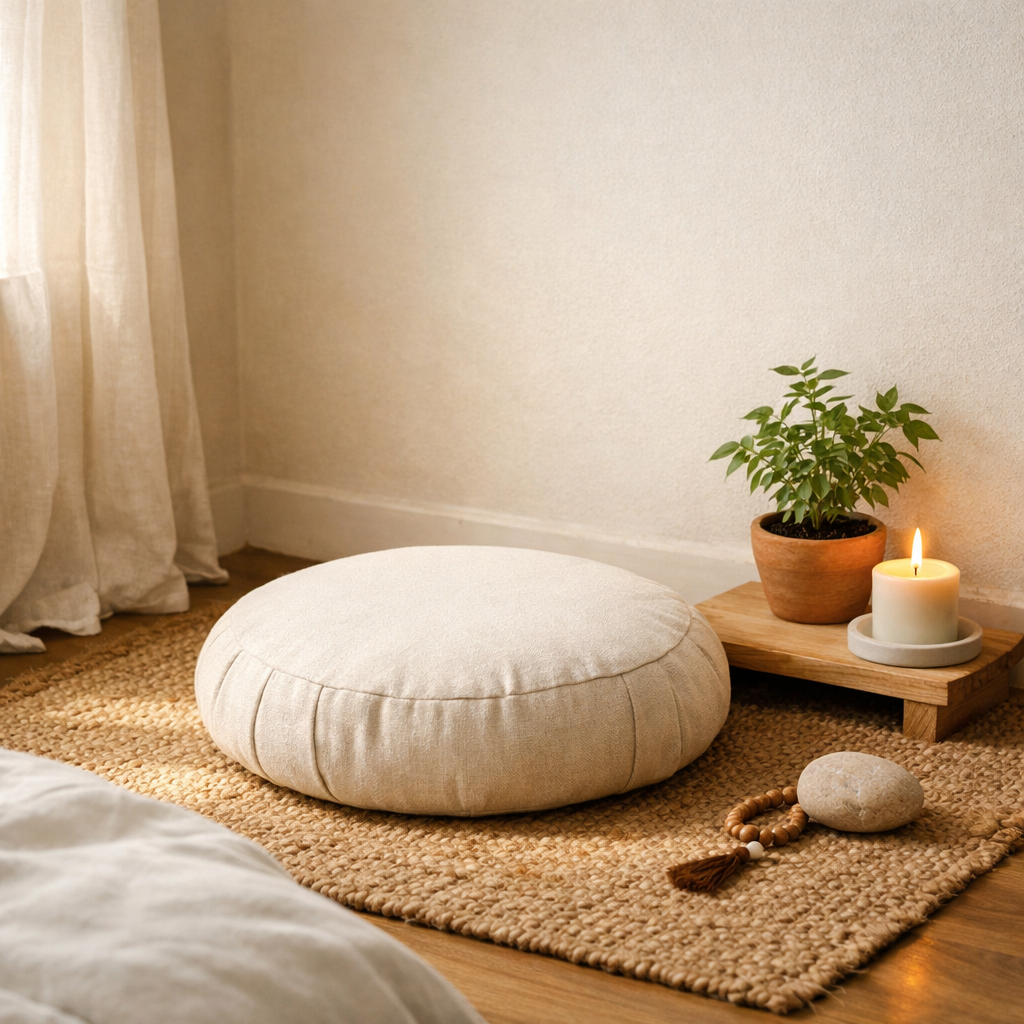
Choose a spot. Any quiet corner will do. The foot of your bed. A spot on the living room floor. A kitchen chair facing a window. The only requirement is that you can sit there without being in the way of household traffic.
Sit on what you have. A folded blanket, a couch cushion on the floor, a regular pillow, or just the carpet. If sitting on the floor is uncomfortable, use a chair. Meditation doesn’t require a specific posture - it requires stillness and attention.
Face a wall or window. A blank wall reduces visual distraction. A window provides natural light and something gentle to rest your gaze on before closing your eyes. Both work.
Use it consistently. Same spot, same time, every day. That’s your meditation space. The consistency does the work that accessories can’t.
The Under-$50 Meditation Space
A small investment that makes the practice more inviting.
A meditation cushion ($20-$40). A zafu (round cushion) or a buckwheat-filled meditation pillow elevates your hips above your knees, which makes sitting cross-legged dramatically more comfortable. This is the single most impactful purchase for anyone who sits on the floor.
A candle ($3-$5). A simple candle provides a focal point for concentration and creates a ritual - lighting it signals the beginning of practice. Unscented is fine. The flame itself is the point.
A small plant ($5-$10). A living element in your space adds a sense of vitality and connection to nature. A small pothos, succulent, or peace lily requires minimal care and thrives in low light.
A timer. Your phone works, but if you want to keep screens out of your space, a basic kitchen timer or a small meditation timer eliminates the temptation to check the time during practice.
The Under-$150 Space
Enough to create something genuinely beautiful and functional.
Meditation cushion + zabuton mat ($50-$80). The zabuton is the flat mat that goes under your cushion, providing padding for your knees and ankles. The combination transforms floor sitting from tolerable to comfortable.
Incense or essential oil diffuser ($10-$25). Scent is a powerful ritual anchor. A simple incense holder and a box of sandalwood sticks, or a small ultrasonic diffuser with lavender oil, adds a sensory dimension to your practice.
A meaningful object ($0-$20). A stone from a meaningful place, a small statue, a photo of a teacher or loved one, a word or phrase written on a card. Something that represents your intention for practice. This becomes the seed of an altar - not for worship, but for focus and reminder.
Soft lighting ($10-$20). A string of warm fairy lights, a salt lamp, or a small LED candle. Soft, warm light signals the brain that it’s time to rest, making the transition into meditation smoother.
A small rug or mat ($15-$25). Defines the space visually. Even in a shared room, a distinct rug says “this area is different.”
Design Principles That Actually Matter
1. Minimize Visual Noise
Your meditation space should feel simpler than the rest of your home. Remove clutter from the immediate area. You don’t need to redecorate the room - just clear the sightline from where you sit. A clean visual field reduces cognitive stimulation and makes settling into stillness easier.
2. Consistent Temperature
Cold makes the body tense. Heat makes it sluggish. Aim for a comfortable temperature in your meditation spot. If you meditate early in the morning, keep a blanket or shawl nearby to drape over your shoulders.
3. Natural Elements
Plants, stones, wood, water - natural materials have a calming effect that’s well-documented in environmental psychology research. Even a single houseplant or a wooden incense holder introduces organic texture into the space.
4. Sound Consideration
Complete silence isn’t necessary (or even possible in most homes). But reducing controllable noise helps. Close the door if you have one. If noise is constant (traffic, neighbors), consider a small white noise machine or soft background sounds.
5. Accessibility
Your meditation space should be easy to get to. If it requires moving furniture, climbing stairs, or any setup beyond sitting down, you’ll skip sessions. The best space is the one you’ll actually use.
Small Space Solutions
The Closet Sanctuary
A walk-in closet can become a surprisingly effective meditation space. It’s naturally enclosed, quiet, and visually simple. Add a cushion, a battery-powered candle, and close the door. Instant sanctuary.
The Window Seat
If you have a window with a sill or a nearby chair, this becomes your spot. Natural light is the best lighting for meditation. Face the window during morning sessions and let the changing sky be your gentle backdrop.
The Corner Screen
A folding screen or room divider ($20-$40) can section off a corner of any room. Behind the screen is your meditation space. In front is the rest of your life. The visual boundary creates psychological separation even in a studio apartment.
The Portable Kit
If you don’t have a consistent spot, create a portable meditation kit: a travel cushion or folded blanket, a candle, and your grounding object, all in a small bag or basket. Set it up wherever works, then put it away. The ritual of unpacking and setting up becomes part of the practice.
Building an Altar (If That Resonates)
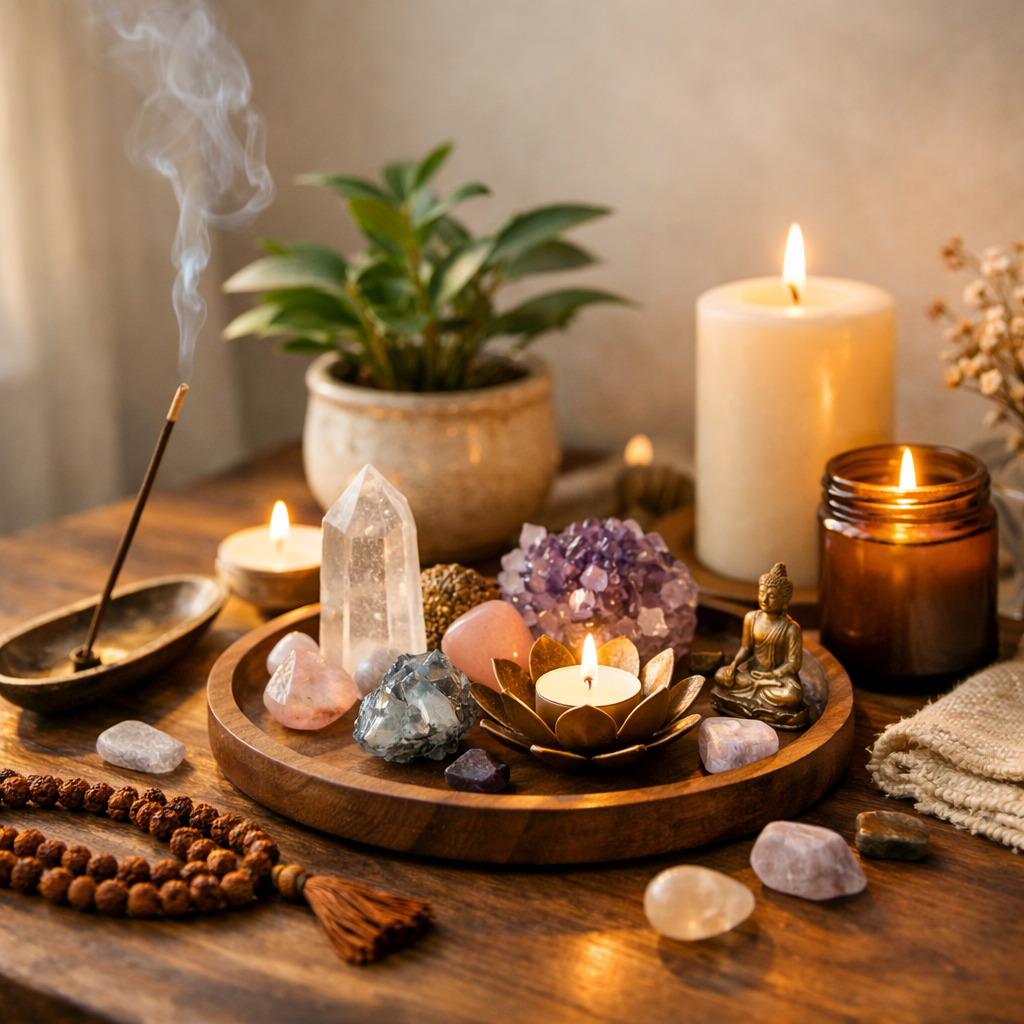
An altar is simply a small collection of meaningful objects that represent your intentions, values, or connection to something larger. It doesn’t require religious belief - it’s a focus point.
Common altar elements:
- A candle - representing light, awareness, or warmth
- A natural object - stone, shell, feather, dried flowers - connection to earth
- An image - a photo, a card, a printed word or quote - representing your intention
- Incense - representing the element of air and the act of letting go
- A small bowl of water - representing clarity and flow
Keep it simple. Three to five objects is plenty. Change them seasonally or when your practice shifts focus. The altar should feel alive, not museum-like.
The Bottom Line
The perfect meditation space is the one you sit in. A corner of your bedroom with a folded towel is infinitely better than a beautiful room you never enter. Start with what you have, where you are. Add elements gradually as your practice develops.
The space doesn’t create the practice. The practice creates the space. Sit down. Close your eyes. Everything else is decoration.