Natural Herbal Stress Relief: Science-Backed Remedies That Actually Work
We live in an era of relentless stimulation. Notifications, deadlines, news cycles, and the ambient hum of a world that never quite powers down—it all accumulates in the body as stress that tightens the jaw, shortens the breath, and erodes sleep quality one restless night at a time. I know this pattern well. Before I found my way to herbal medicine, I was running on cortisol and caffeine, convinced that stress was simply the price of being alive.
Herbal stress relief changed that story for me, and the research increasingly explains why. In this guide, I will not ask you to take anything on faith. Instead, I will walk you through the herbs that have earned their place in the scientific literature—remedies with clinical evidence behind their calming claims—and show you how to integrate them into your daily life.
Why Herbs Work for Stress: The Science
Chronic stress activates the hypothalamic-pituitary-adrenal (HPA) axis, flooding the body with cortisol. In small doses, cortisol is protective—it sharpens focus and mobilizes energy. But when cortisol stays elevated for weeks or months, it contributes to anxiety, weight gain, immune suppression, and cognitive decline.
Herbal remedies address stress through several mechanisms:
- Adaptogens (ashwagandha, rhodiola) modulate the HPA axis itself, helping the body produce appropriate cortisol levels rather than staying in overdrive.
- Nervines (chamomile, lemon balm, passionflower) act on the nervous system to promote relaxation, often by enhancing GABA activity—the same neurotransmitter pathway targeted by anti-anxiety medications.
- Aromatics (lavender) influence the limbic system through olfactory pathways, producing calming effects that bypass conscious thought.
Understanding these mechanisms matters because it helps you choose the right herb for your specific stress pattern. Chronic, low-grade stress responds best to adaptogens taken daily. Acute anxiety spikes call for fast-acting nervines. And environmental stress benefits from aromatic interventions.
The Top Herbs for Stress Relief (With Clinical Evidence)
Ashwagandha (Withania somnifera)
Ashwagandha is the most rigorously studied adaptogen for stress reduction. A 2019 randomized, double-blind study published in Medicine found that participants taking 240mg of ashwagandha extract daily experienced a 28% reduction in cortisol levels, along with significant improvements in anxiety, sleep quality, and overall well-being compared to the placebo group.
The herb works by modulating the HPA axis and reducing the reactivity of the stress response. Think of it as recalibrating your internal thermostat so that everyday pressures no longer trigger a full alarm response.
Recommended use: 300-600mg of standardized root extract (look for KSM-66 or Sensoril) daily with food. Effects build over 2-4 weeks of consistent use. Cycle 6-8 weeks on, 2 weeks off.
Lemon Balm (Melissa officinalis)
Lemon balm is a gentle but effective nervine that has been used since the Middle Ages for calming nervous tension. Modern research supports this traditional use—a 2014 study found that a 600mg dose of lemon balm extract significantly improved mood and calmness within one hour, while also boosting cognitive performance under stress.
What I appreciate about lemon balm is its subtlety. It does not sedate or dull awareness. Instead, it smooths the sharp edges of anxiety while keeping the mind clear—making it ideal for daytime use when you need to stay functional.
Recommended use: As a tea (2-3 cups daily), tincture, or standardized extract (300-600mg). Safe for daily, long-term use.
Passionflower (Passiflora incarnata)
For acute anxiety and racing thoughts, passionflower is remarkably effective. A clinical trial published in the Journal of Clinical Pharmacy and Therapeutics found passionflower as effective as oxazepam (a benzodiazepine) for generalized anxiety, with significantly fewer side effects including less job impairment.
Passionflower works by increasing GABA levels in the brain, promoting a state of calm without the heaviness of pharmaceutical sedatives. It is particularly helpful for anxiety-driven insomnia—racing thoughts at bedtime respond well to passionflower tea taken 30-60 minutes before sleep.
Recommended use: Tea before bedtime, tincture (40-80 drops), or capsules (400-800mg). Especially effective for sleep-related anxiety.
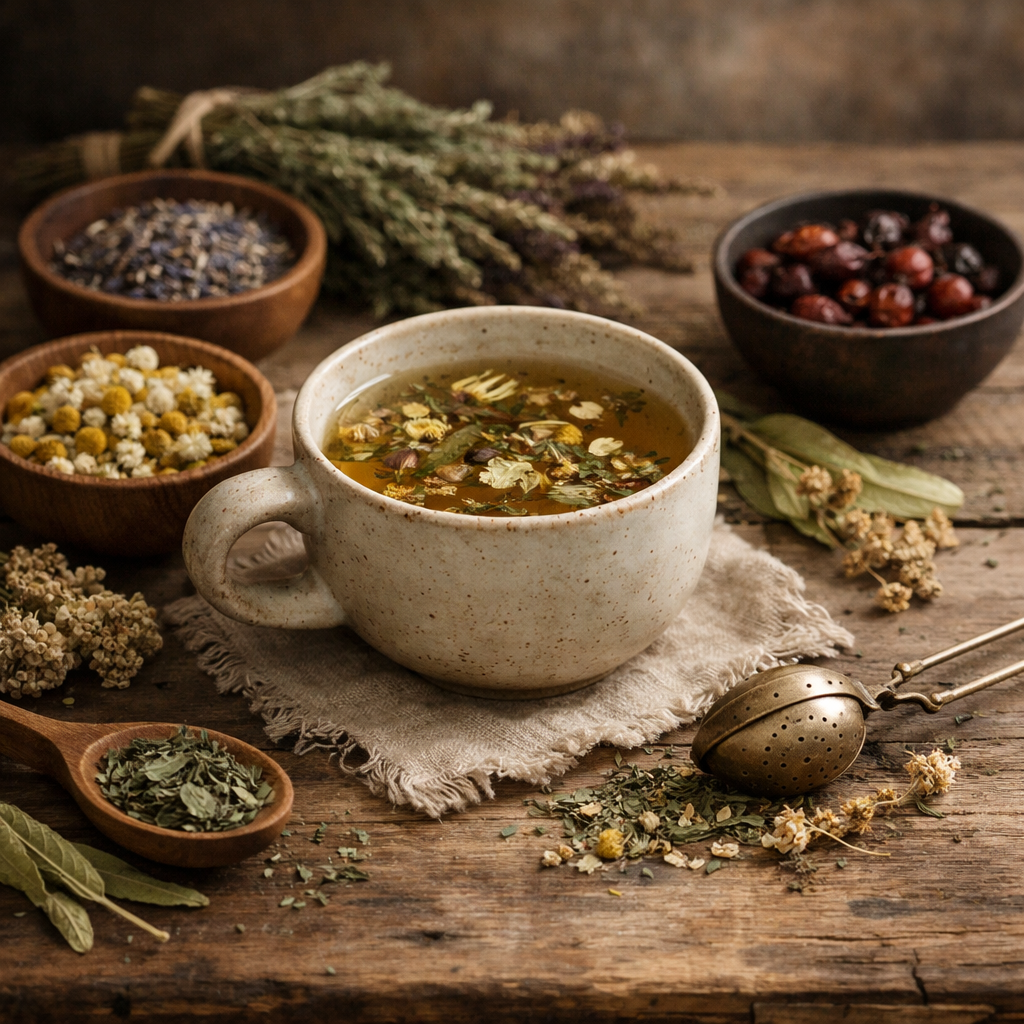
| Herb | Product Name | ASIN | Price ($) | |——|————-|——|———–| | Ashwagandha | KSM-66 Ashwagandha Root Extract - 600mg | B078K14TP7 | 21.99 | | Lemon Balm | Organic Lemon Balm Tea - Traditional Medicinals | B0009F3PM6 | 6.49 | | Passionflower | Nature’s Way Passionflower Herb Capsules | B0001FVIF2 | 10.49 |
Shop herbal stress relief supplements on Amazon ›
Building a Herbal Stress Relief Protocol
Knowing which herbs work is one thing. Building a sustainable daily protocol is another. Here is the approach I recommend to my students, based on years of personal practice and the clinical research.
Morning: Foundation with Adaptogens
Take your ashwagandha with breakfast. The fat in food improves absorption, and the adaptogenic effects build best with consistent morning dosing. Pair it with a cup of green tea—the L-theanine in green tea (an amino acid with its own anxiety-reducing research) complements ashwagandha beautifully, promoting calm alertness without jitters.
Midday: Reset with Nervines
The afternoon stress spike—when cortisol naturally rises and the day’s accumulated tension peaks—is the perfect time for lemon balm. A cup of lemon balm tea around 2-3 PM can interrupt the stress cascade, restore mental clarity, and carry you through the remainder of the workday with greater ease.
Evening: Wind Down with Calming Herbs
Passionflower or chamomile tea 30-60 minutes before bed creates a gentle transition from wakefulness to sleep. If anxiety tends to intensify in the evening (a common pattern), consider combining passionflower with valerian root for a more robust calming effect.
Weekly: Aromatic Support
Lavender essential oil deserves a place in your weekly routine. Add a few drops to a warm bath on Sunday evening, use a diffuser during your work week, or simply inhale from the bottle during moments of acute stress. A 2012 study found that lavender aromatherapy reduced pre-procedure anxiety by 46% in surgical patients—evidence that even brief exposure carries meaningful benefit.
When Herbs Are Not Enough
I want to be straightforward about something important. Herbal remedies are powerful, but they are not a substitute for professional mental health care when stress has escalated into clinical anxiety or depression. If you experience persistent feelings of dread, panic attacks, inability to function at work or in relationships, or thoughts of self-harm, please reach out to a healthcare provider.
Herbs work best as part of a comprehensive approach to stress management that includes adequate sleep, regular movement, meaningful human connection, and professional support when needed. They are allies, not replacements.
That said, for the vast majority of everyday stress—the kind that accumulates silently and erodes your quality of life—herbal remedies offer a gentle, effective, and deeply human way to restore balance. The earth has been providing these medicines for as long as humans have walked upon it. All we need to do is remember to use them.